
In food processing environments, sanitation performance is directly linked to efficiency, cost control, and compliance. Traditional cleaning systems often rely heavily on manual labor, inconsistent pressure control, and inefficient water usage, which can lead to variability in results and increased operational costs.
Open Plant Cleaning (OPC) systems introduce a more structured and controlled approach to sanitation delivery. Developed and implemented across food and beverage processing facilities, these systems are designed to improve consistency, reduce resource consumption, and optimize overall cleaning performance.
A system designed for control and flexibility
The OPC system differs from traditional cleaning approaches through the use of a multistage booster pump that increases water pressure from 2 bar to up to 27 bar. This enables medium-pressure water to be distributed effectively across rinse and foam application points within a processing facility.
The system is designed to be flexible and can be adapted to the specific requirements of each operation. Pump stations can support multiple users simultaneously, ranging from single-user applications to large-scale operations with up to 110 users. Pressure can also be adjusted between 10 and 27 bar, depending on the cleaning application.
This level of control ensures that cleaning is not only effective but also aligned to the specific demands of the production environment.
Optimized cleaning through structured application
- Rinsing, where nozzles are designed to create the required mechanical action through controlled spray angles and water volume, enabling effective debris removal
- Foaming, where detergents are applied using wide-angle foam nozzles to ensure rapid and consistent surface coverage
- Sanitization, where increased pressure and application control allow for broader coverage and effective final treatment
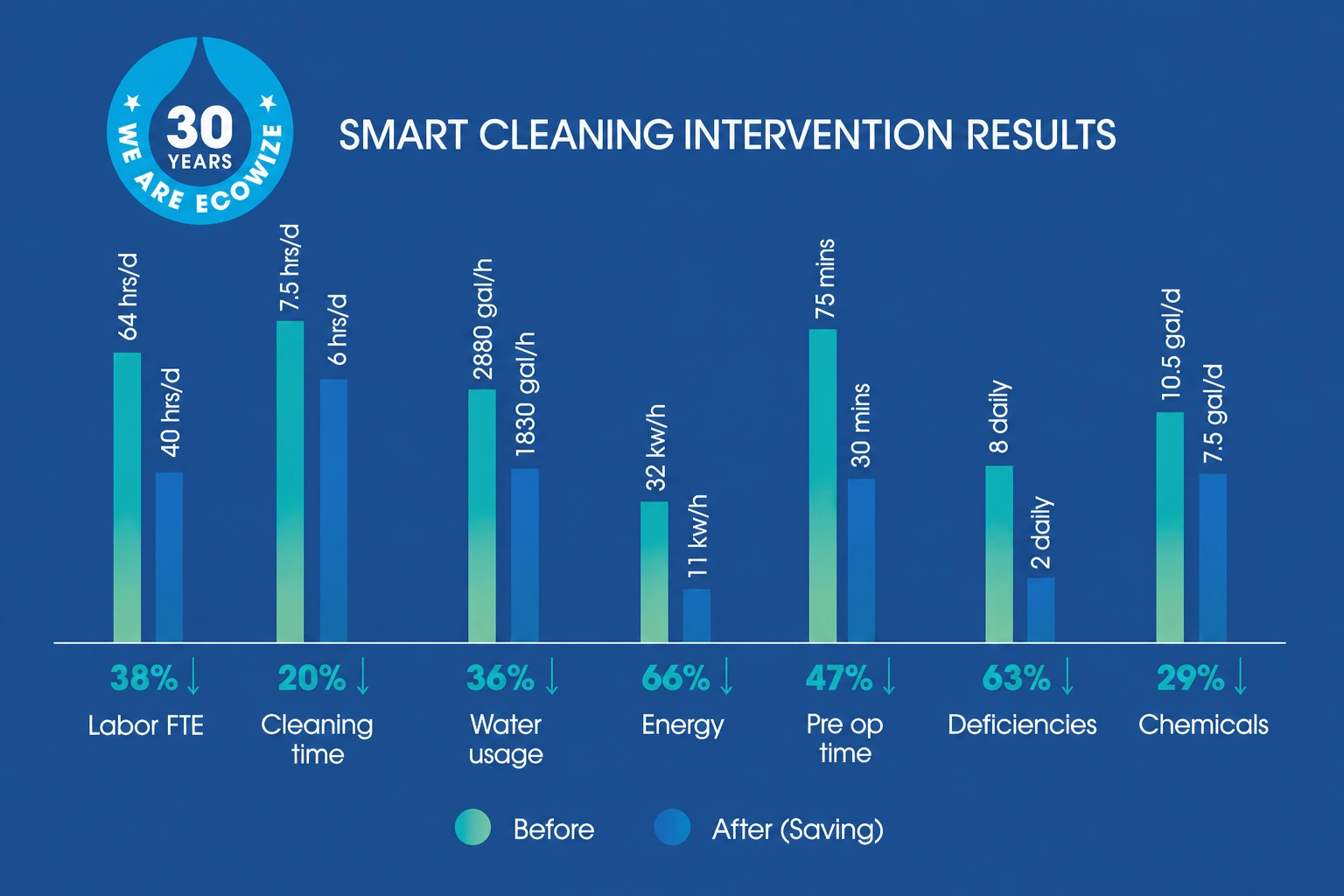
Efficiency gains across water, time, and energy
The design of the OPC system supports measurable efficiency improvements across multiple operational areas.
Optimized nozzle design and controlled application can reduce water usage by up to 35%. The structured three-step process reduces setup and execution time by up to 50%, allowing cleaning to be completed more efficiently without compromising hygiene standards.
In addition, the use of IE5 motors contributes to reduced energy consumption and lower maintenance requirements when compared to traditional high-pressure or tap water systems.
These combined efficiencies result in a more controlled and cost-effective sanitation process.
Reducing labor dependency and operational costs
Traditional cleaning systems often rely heavily on manual labor, with a significant portion of sanitation costs attributed to staffing requirements.
OPC systems reduce this dependency by introducing a more efficient and controlled cleaning process. By optimizing application, reducing cleaning time, and supporting preventative maintenance, facilities can reduce downtime and improve overall operational performance.
This creates opportunities for increased production output, improved product quality, and more predictable cost structures.
A complete sanitation solution
Open Plant Cleaning systems are not implemented as standalone equipment. They form part of a broader sanitation solution that includes system design, installation, optimization, and ongoing support.
Ecowize provides end-to-end support, from assessing current cleaning processes to implementing tailored OPC solutions aligned with facility requirements. This includes technical audits of existing procedures, as well as evaluation of cleaning chemistry and utility usage to ensure both effectiveness and sustainability.
The focus is on delivering a system that integrates into existing operations while improving performance and efficiency.
Engineering and technical expertise
The delivery of OPC systems is supported by technical expertise and established partnerships within the industry.
Through collaboration with Foamico and Grundfos, Ecowize is able to provide systems that combine performance, reliability, and ease of use. Each installation is supported by a detailed efficiency review, ensuring that the system operates at the required standard and delivers consistent cleaning outcomes.
This ensures that sanitation challenges are addressed through practical, engineered solutions rather than isolated interventions.
Conclusion
In modern food processing environments, sanitation must be efficient, controlled, and consistent.
Open Plant Cleaning systems provide a structured approach to achieving these outcomes, improving cleaning performance while reducing water usage, energy consumption, and labor dependency.
By implementing an OPC system, facilities can enhance hygiene standards, optimize operational efficiency, and maintain compliance in increasingly demanding production environments.
Is your current cleaning system delivering consistent results, or increasing costs and downtime?
Open Plant Cleaning systems provide a structured, efficient approach to sanitation, reducing resource usage while improving performance.Ecowize supports food processing facilities with tailored OPC solutions designed to optimize cleaning processes and maintain audit-ready standards.